Empowering Community Health Innovations

We design, test, and scale community-centred public health models across India.

Empowering Community Health Innovations

Transforming lives through research-driven public health initiatives across India and beyond.

Guiding Principles of Our Work

01.

Research-Based

Our initiatives are grounded in rigorous research, ensuring impactful solutions for community health challenges.

02.

Technology-Enabled

We leverage the latest technologies to enhance healthcare delivery and community engagement effectively.

03.

Collaborative Approach

Partnering with local communities and global organizations to create sustainable health solutions.

You didn’t start as “leaders of finished models.” You became leaders by spending years learning, observing, adapting, and building slowly from the field.

About

Aarogyam Knowledge to Action Society

AaKAS improves community health across India by bridging evidence and local action. We work alongside communities to build care systems that endure.

img-20231010-151342-1

Our Initiatives

Explore our diverse range of programs designed to uplift community health and well-being.

AaKAS translates research into community action. We design, test, and
scale evidence-based public health programmes across rural, tribal,
and urban India.

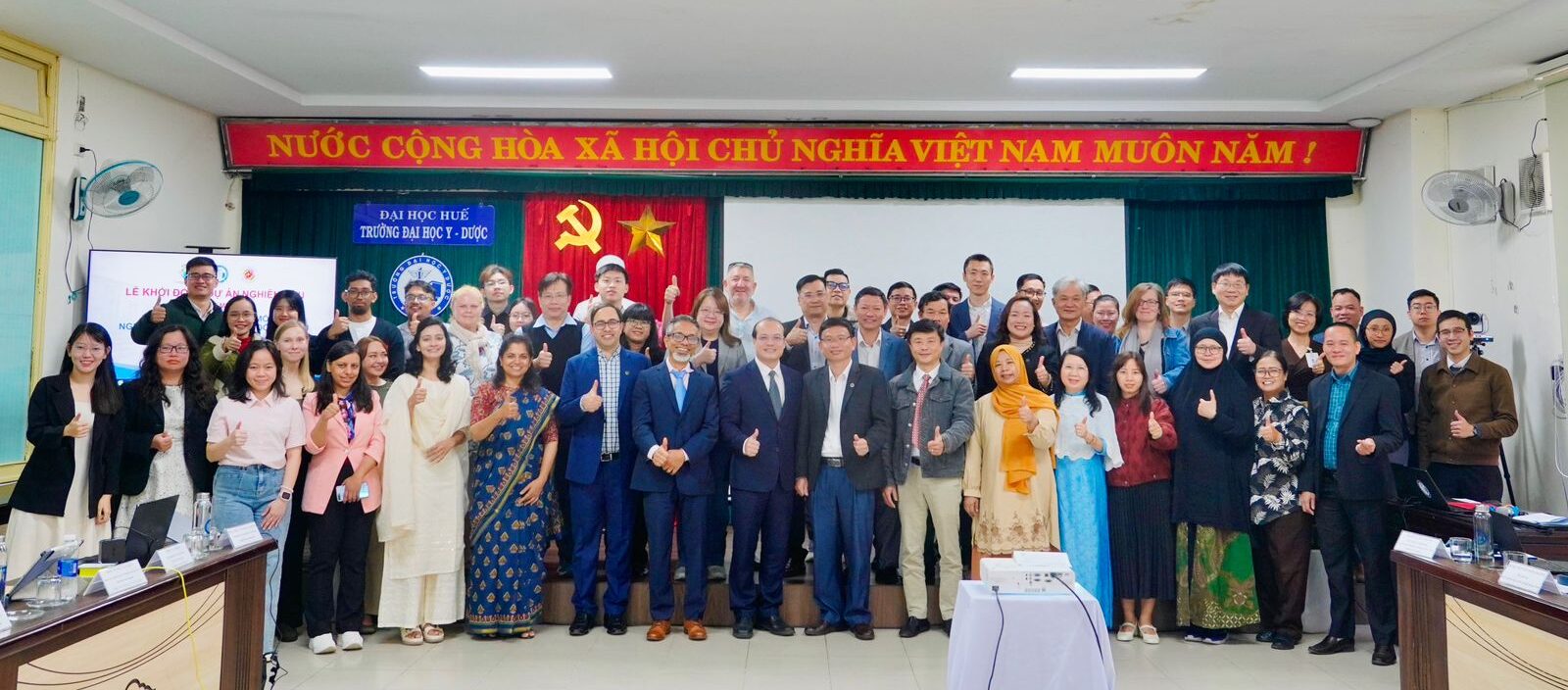
Our work spans implementation research, health systems strengthening, capacity building, and programme evaluation. We collaborate with WHO,
UNICEF, government agencies, and academic institutions to build sustainable models that integrate with existing health infrastructure.

Core areas include:
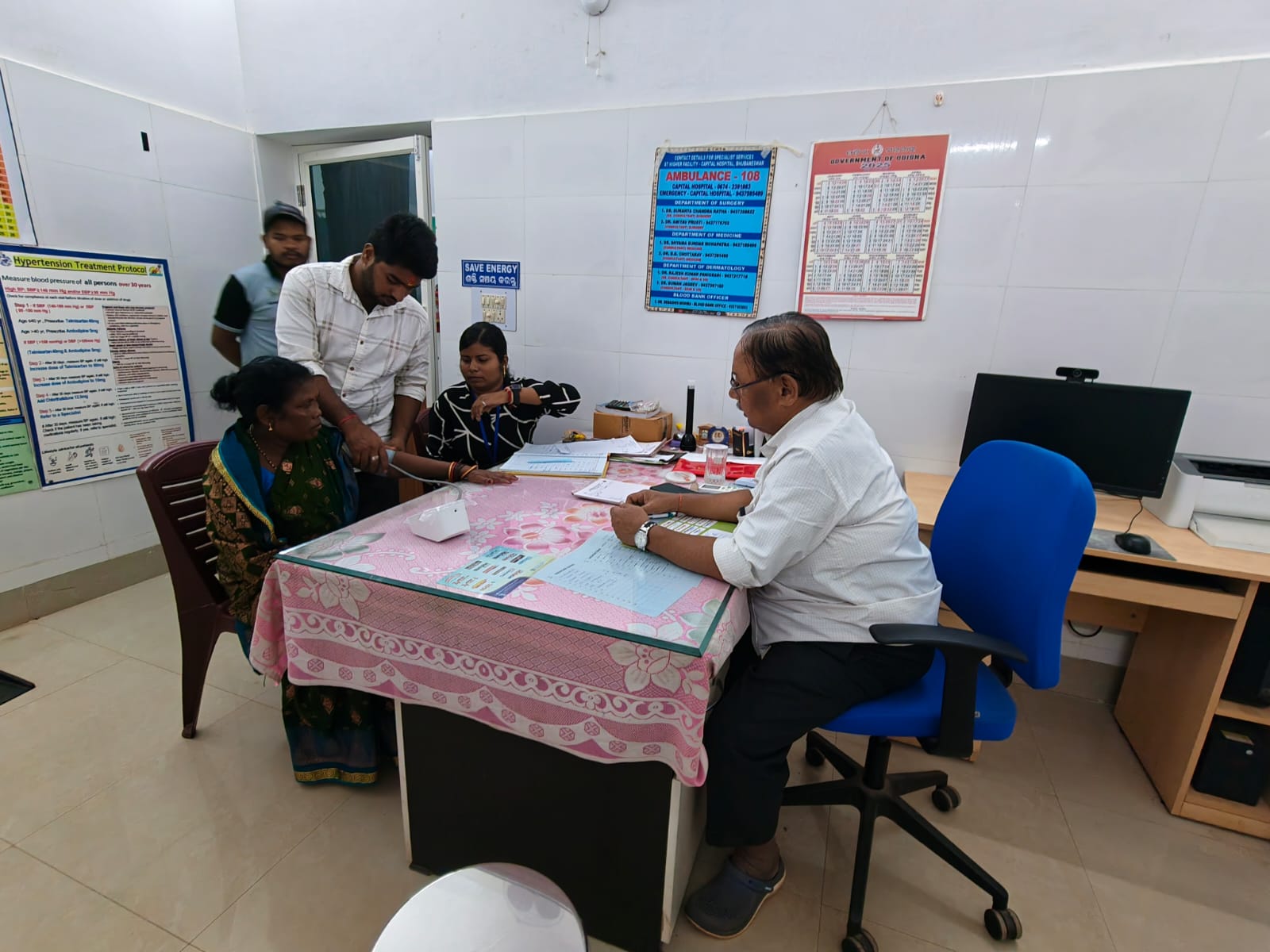
• Non-communicable disease care and palliative services
• Youth leadership and community engagement
• Health worker training and workforce development
• Policy advisory and systems strengthening
• Telemedicine & Digital Health Integration

From pilot studies to multi-state implementation, we ensure interventions are evidence-informed, context-responsive, and designed for long-term sustainability.

Our Services

Evidence-informed solutions that strengthen health systems, institutions, and communities.

file 000000001a747209b35c51bf53ff7ac4

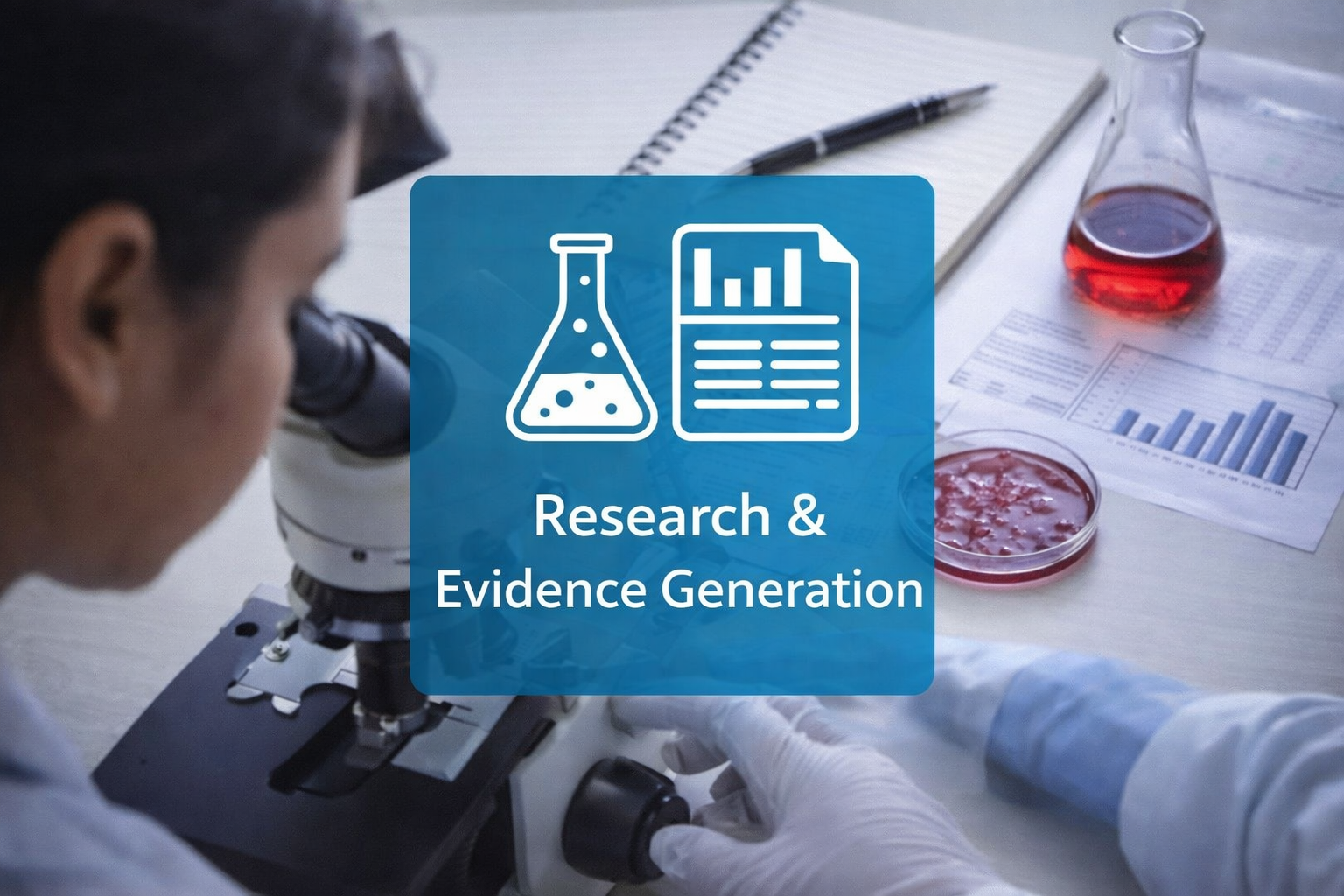
Research & Evidence Generation

AaKAS designs and executes field-based research that drives evidence-informed
public health decisions. Since 2013, we have conducted baseline and endline
assessments, qualitative evaluations, and randomized controlled trials across
Gujarat, Madhya Pradesh, Bihar, and Odisha.

Major research and evaluation projects since 2013

• Baseline survey for anemia prevalence study (9,558 participants across 40
villages, Ujjain & Ratlam, 2021)
• Household survey for PM-JAY health systems research (200 beneficiaries,
Gujarat & MP, 2019)
• PMMVY qualitative evaluation for PHFI & UNICEF (Gujarat & Bihar, 2022)
• Barakat Bundle RCT implementation partnership (350 mothers & newborns,
Ratlam, 2020-2023)
• End-line assessment for SEWA Shakti Kendra project (624 respondents,
Ahmedabad & Surat, 2018-2019)

We combine quantitative surveys, qualitative interviews, and mixed-method
approaches to ensure findings are rigorous, context-appropriate, and actionable
for scale.

file 000000002e00720989fe32163c0e626b

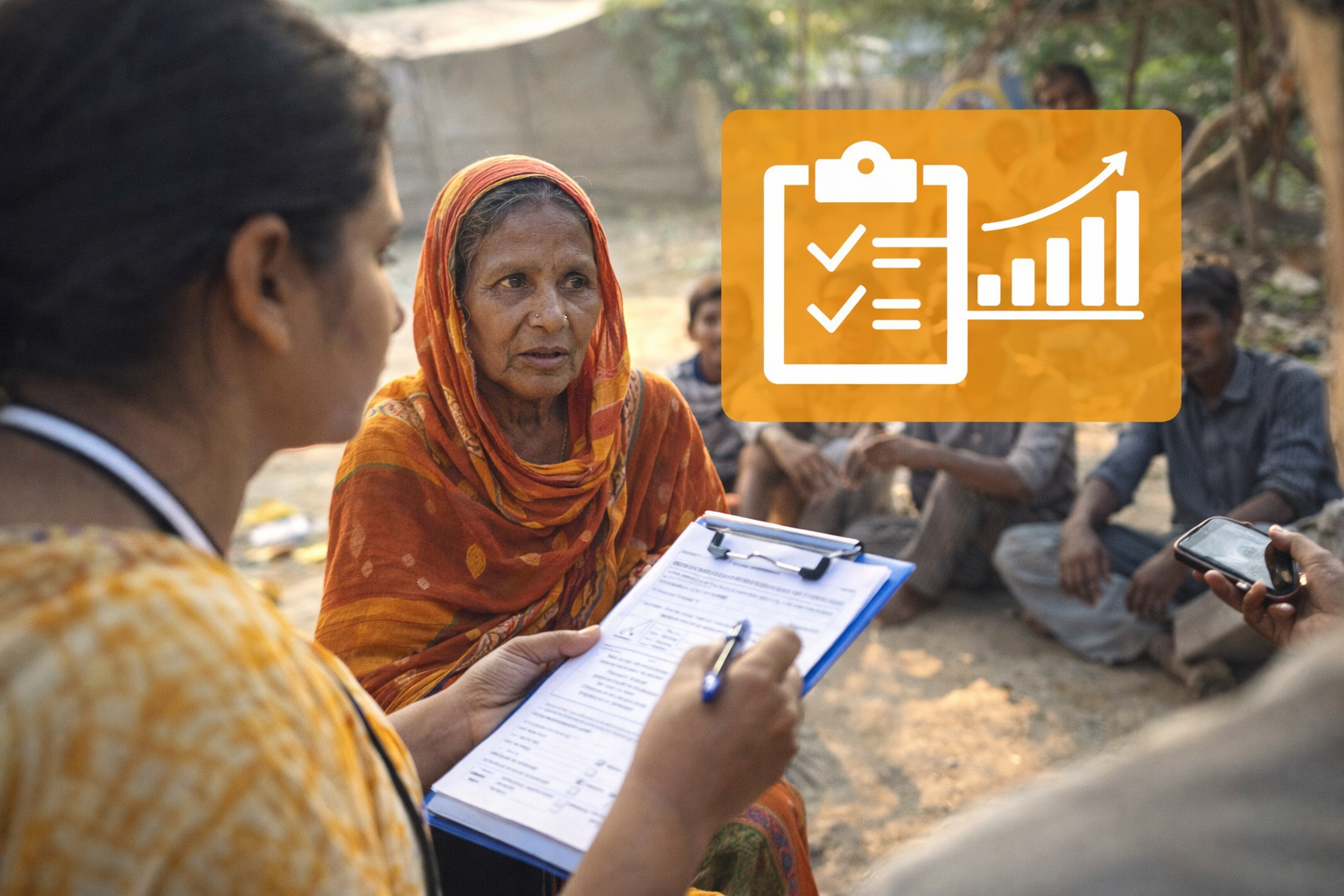
Program Assessment & Impact Evaluation

We evaluate public health programmes to measure effectiveness, identify operational gaps, and strengthen delivery systems. Our assessments go beyond reporting — they translate findings into practical implementation improvements. AaKAS has supported institutional partners in reviewing programme models across districts, ensuring measurable outcomes and scalability.

Since 2016, our assessment work has included

• PMMVY program evaluation across Gujarat & Bihar (PHFI & UNICEF, 2022)
• Community health program review for J. Watumull Global Hospital & Research
Center, Mount Abu (Brahma Kumaris, 2023)
• Barakat Bundle pilot assessment (350 beneficiaries, survey & feedback
analysis, 2021-2022)
• SEWA Shakti Kendra end-line study (624 respondents, 20 qualitative
interviews, 2018-2019)
• Health systems research for PM-JAY (200 household surveys, Gujarat & MP, 2019)

Our evaluations go beyond reporting outcomes—we translate findings into
operational improvements, system strengthening recommendations, and evidence for scale-up decisions.

file 00000000732c7209af690fd256bb7439

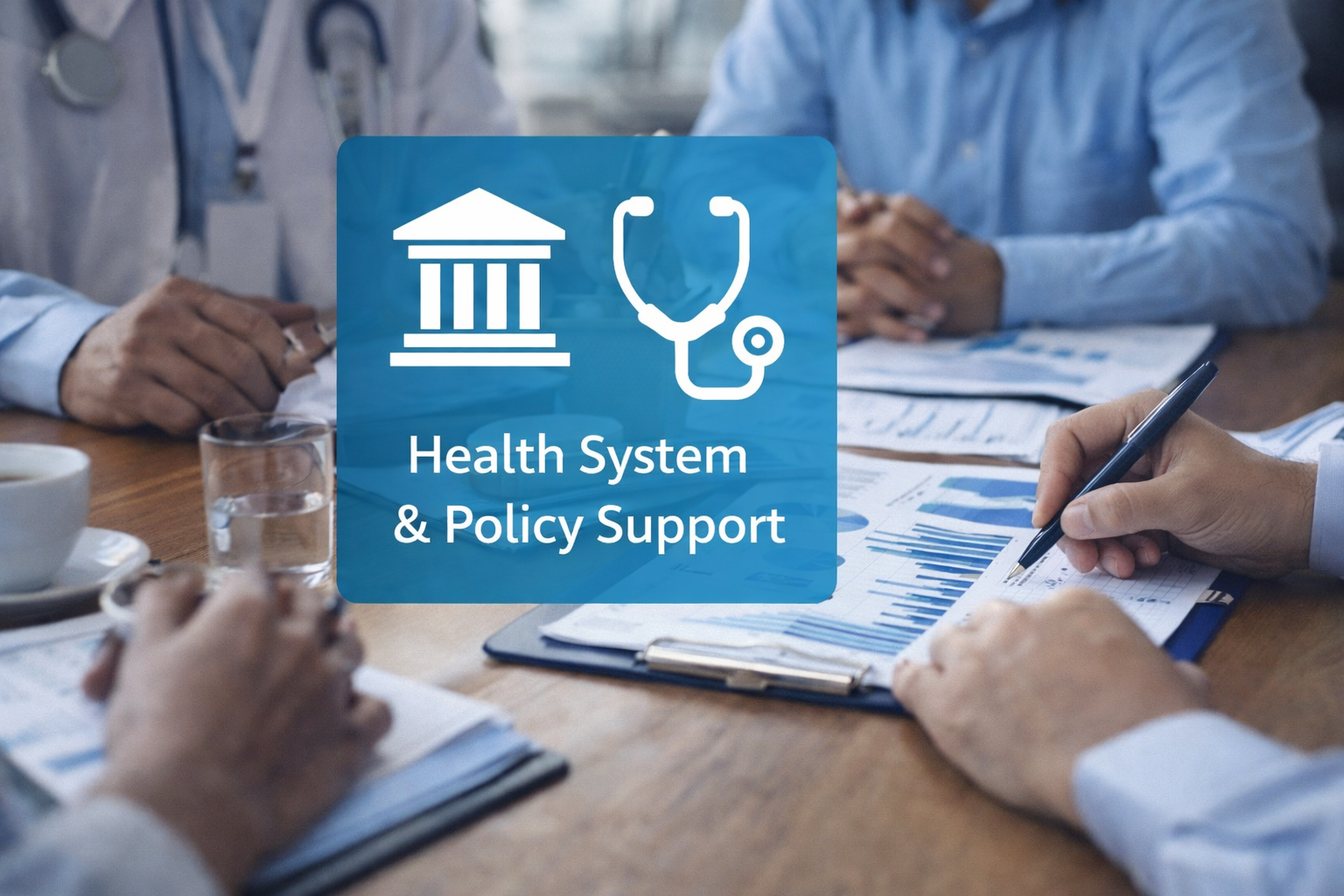
Health Systems & Policy Support

AaKAS provides structured technical support to municipal bodies, state agencies, and public institutions to operationalise health policies at the local level. Our work includes framework alignment, reporting systems, priority mapping, and intervention design. We support institutions in strengthening governance, monitoring mechanisms, and service delivery integration.

Our health systems work includes

• PMMVY program evaluation across Gujarat & Bihar (PHFI & UNICEF, 2022)
• Community health program review for J. Watumull Global Hospital & Research
Center, Mount Abu (Brahma Kumaris, 2023)
• Barakat Bundle pilot assessment (350 beneficiaries, survey & feedback
analysis, 2021-2022)
• SEWA Shakti Kendra end-line study (624 respondents, 20 qualitative
interviews, 2018-2019)
• Health systems research for PM-JAY (200 household surveys, Gujarat & MP, 2019)

We bridge policy frameworks and field realities, ensuring health systems
function effectively beyond project timelines.

file 000000009b18720985331969de5970d6

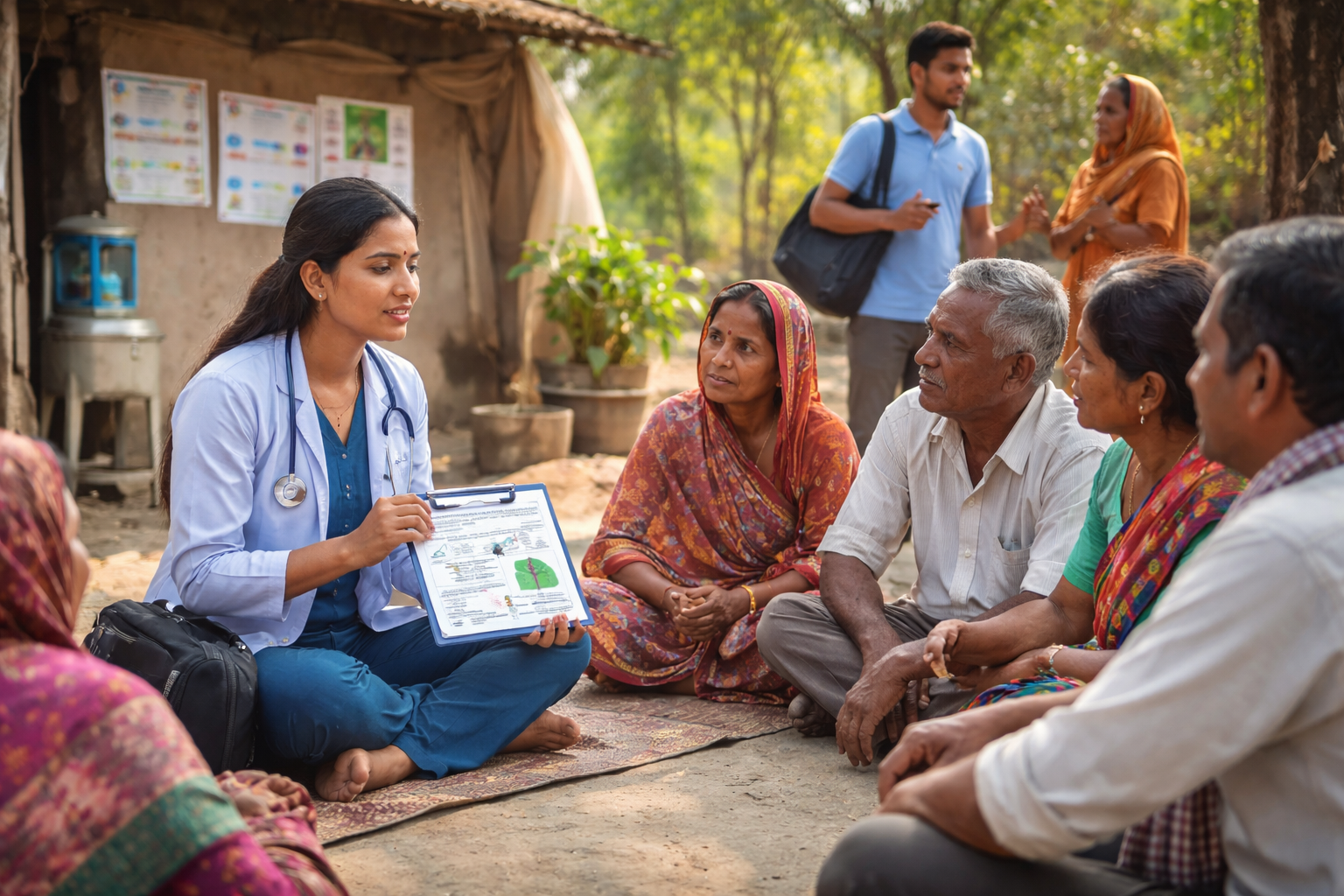
Community-Based Implementation

We implement structured community health interventions across rural, tribal, and underserved urban areas. Our models integrate telemedicine-enabled care, home-based services, and youth engagement platforms to ensure continuity of care. To date, AaKAS has directly supported over 20,000 individuals through community-level initiatives.

Since 2013, our field implementation work has reached

• 20,000+ individuals through therapy, wellness, and care services
• 750+ therapy sessions in Tillor Village wellness camps (8 camps, 2023)
• 1,250+ participants across community health camps (Narmada district, 2017-2018)
• 350 mothers & newborns through Barakat Bundle distribution (Ratlam, 2020-2022)
• 200+ Sickle Cell Disease patients screened across 30 tribal villages
(Narmada, 2017-2018)

Our implementation models emphasize task-shifting, telemedicine integration,
community mobilization, and sustainable local workforce development—ensuring
interventions remain functional beyond external support.

file 0000000072e472098a55957de2ac18e0

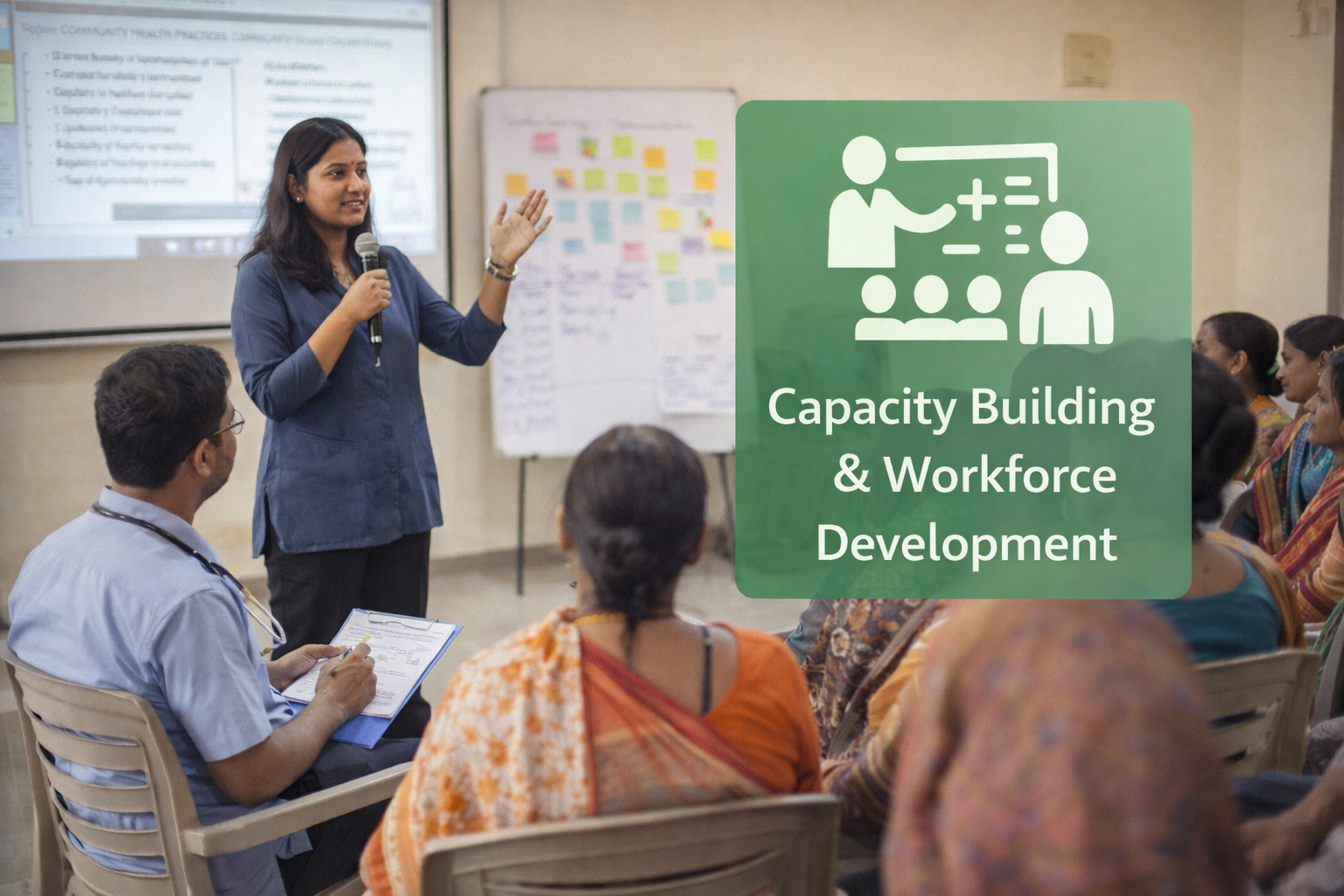
Capacity Building & Workforce Development

AaKAS designs and delivers structured training programmes, technical modules, and IEC materials for frontline health workers, facilitators, and institutional teams. We have trained over 1,000 health workers across multiple states, strengthening local capacity in NCD management, palliative care, community outreach, and service coordination.

Since 2017, we have trained

• 1,000+ health workers across multiple states (Gujarat, Madhya Pradesh,
Odisha, Rajasthan)
• 69 ASHAs on maternal-newborn care (Barakat Bundle project, Ratlam, 2020-2021)
• 38 community health workers on musculoskeletal disorder management
(ARCH Dharampur, 2017)
• 22 wellness facilitators for ISHA Wellness Centres (Ratlam, Indore, Jaora,
2021-2022)
• 50+ medical officers & public health managers (Surat Municipal Corporation, 2017)
• 70 women police constables on health & self-defense (Nirbhaya Programme,
Modasa, 2017)

Our training approach emphasizes hands-on learning, task-shifting models, and
sustainable capacity rather than one-time workshops.

file 00000000fc9c7207a368da87c522f6c4

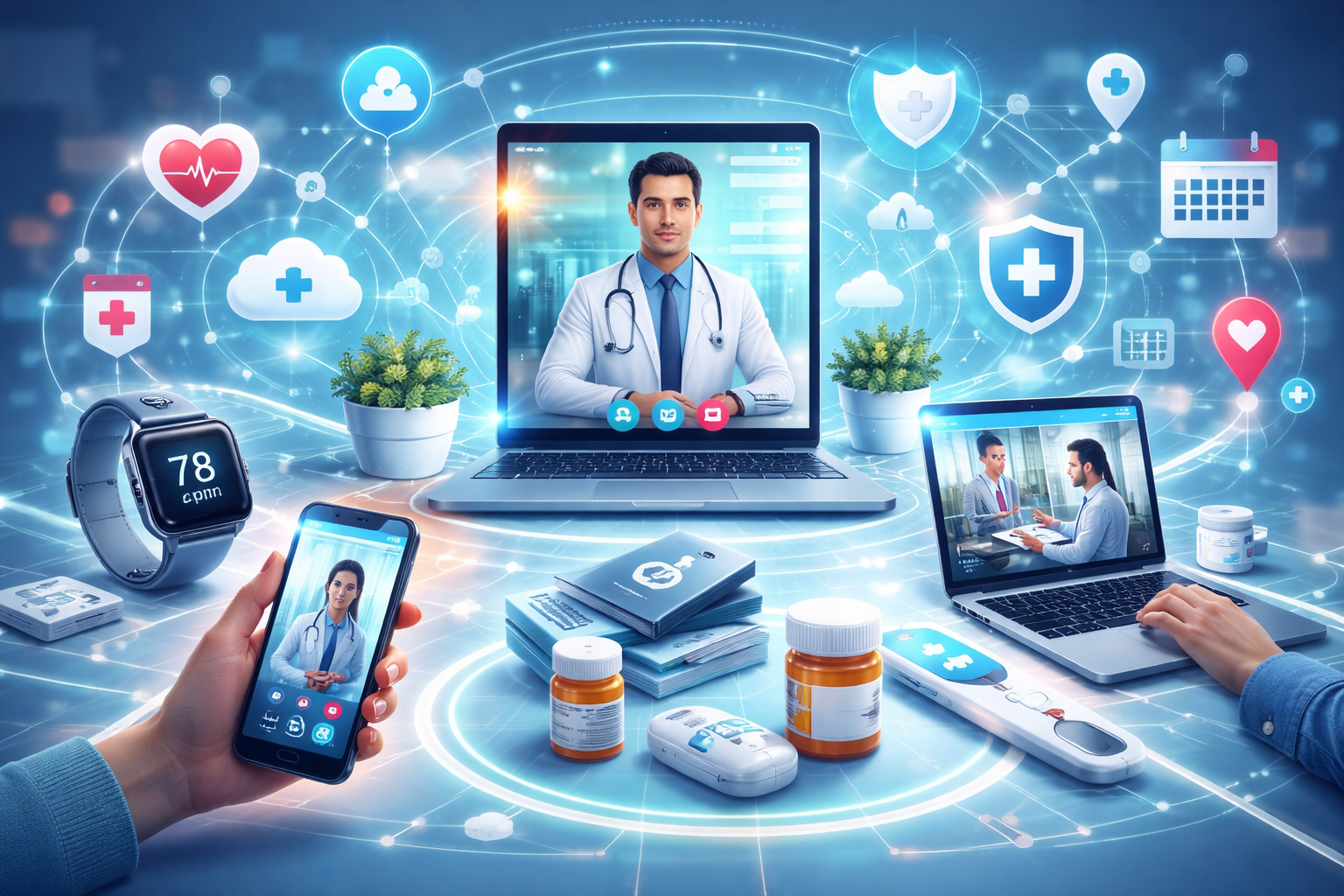
Telemedicine & Digital Health Implementation

AaKAS designs and implements telemedicine-enabled community care models to improve access to specialist guidance in rural, tribal, and underserved areas. We have integrated remote consultations, assisted telehealth facilitation, and referral coordination into community-based service delivery systems. Our approach combines frontline health workers, digital platforms, and structured follow-up protocols to ensure continuity of care while reducing geographic and financial barriers to treatment.

Our telemedicine implementation work includes

• Karuna Setu: Task-shifted telemedicine model for palliative care, NCD
management, and therapy services (2020-present)
• Training local health workers to deliver care with remote specialist support
• Establishing telemedicine protocols for musculoskeletal disorders, neurological conditions, and chronic disease management
• Community mobilization strategies to increase acceptance and utilization of telemedicine services
• Technical setup and operational guidance for sustainable telemedicine programs

We design telemedicine systems that work within existing community health
infrastructure, ensuring models are culturally appropriate, technically
feasible, and sustainable beyond external funding.

file 00000000062872099898db524ed4584d

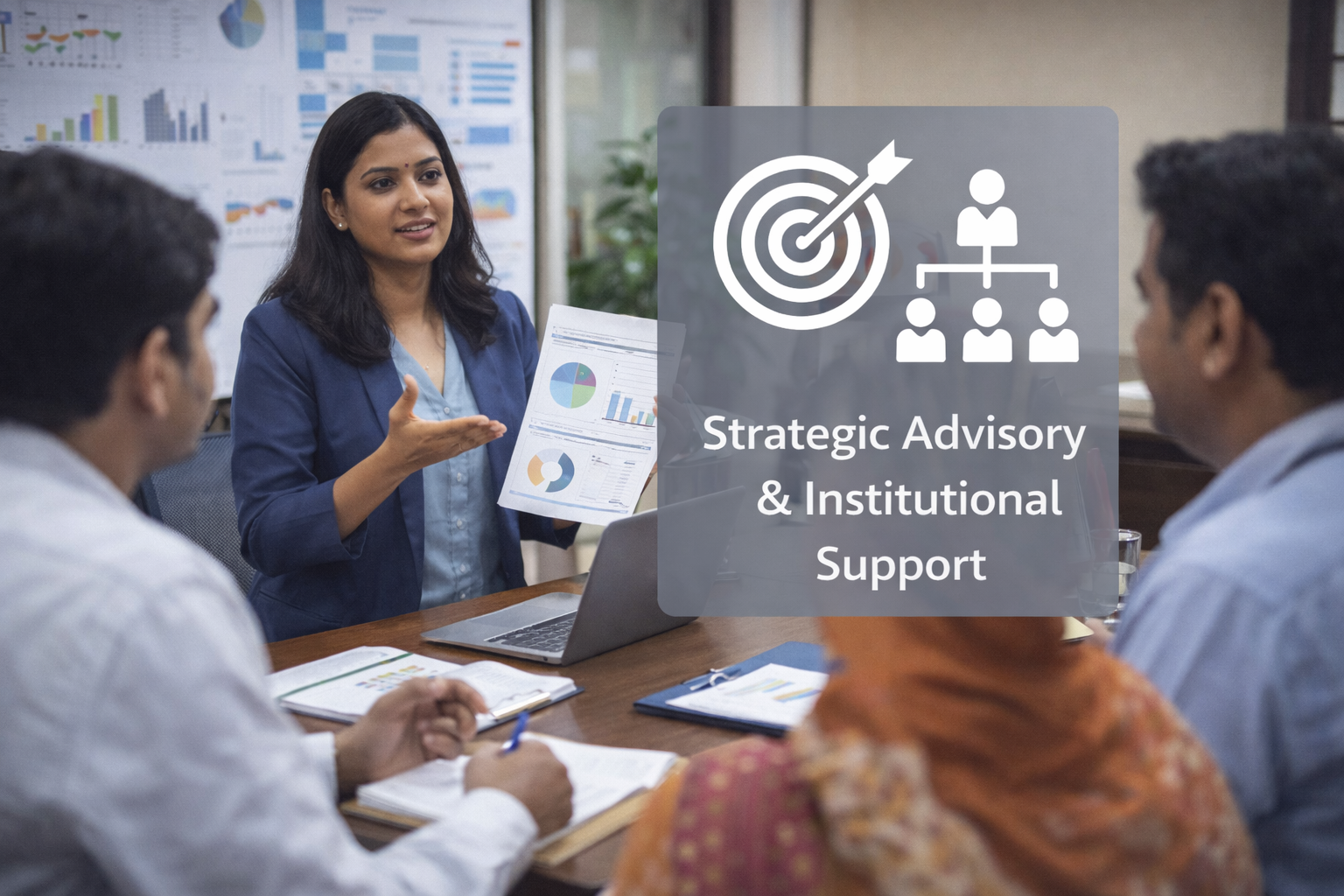
Strategic Advisory & Institutional Support

We provide strategic advisory to governments, non-profits, and academic institutions seeking to design or refine public health initiatives. Our support includes programme design, monitoring frameworks, operational planning, and systems integration. Drawing from over a decade of field engagement since 2013, we help institutions translate policy intent into implementable, evidence-aligned models.

Our advisory work has supported

• Indian Institute of Public Health Gandhinagar (IIPHG): Health systems
research design, geriatric care curriculum development, health education
material creation (2018-2022)
• J. Watumull Global Hospital & Research Center (Mount Abu): M&E framework
development, community program review, performance indicator systems (2023)
• Barakat Bundle (USA-based NGO): Health education material development for
maternal-child health (2018-2023)
• ARCH Dharampur: Adolescent health module development, community-based
therapy care training systems (2016-2017)
• Multiple organizations: Data management systems, human resource structuring,
task allocation frameworks

We bridge policy frameworks and field realities, ensuring health systems
function effectively beyond project timelines.

Our Flagship Projects

jatni 1024x565

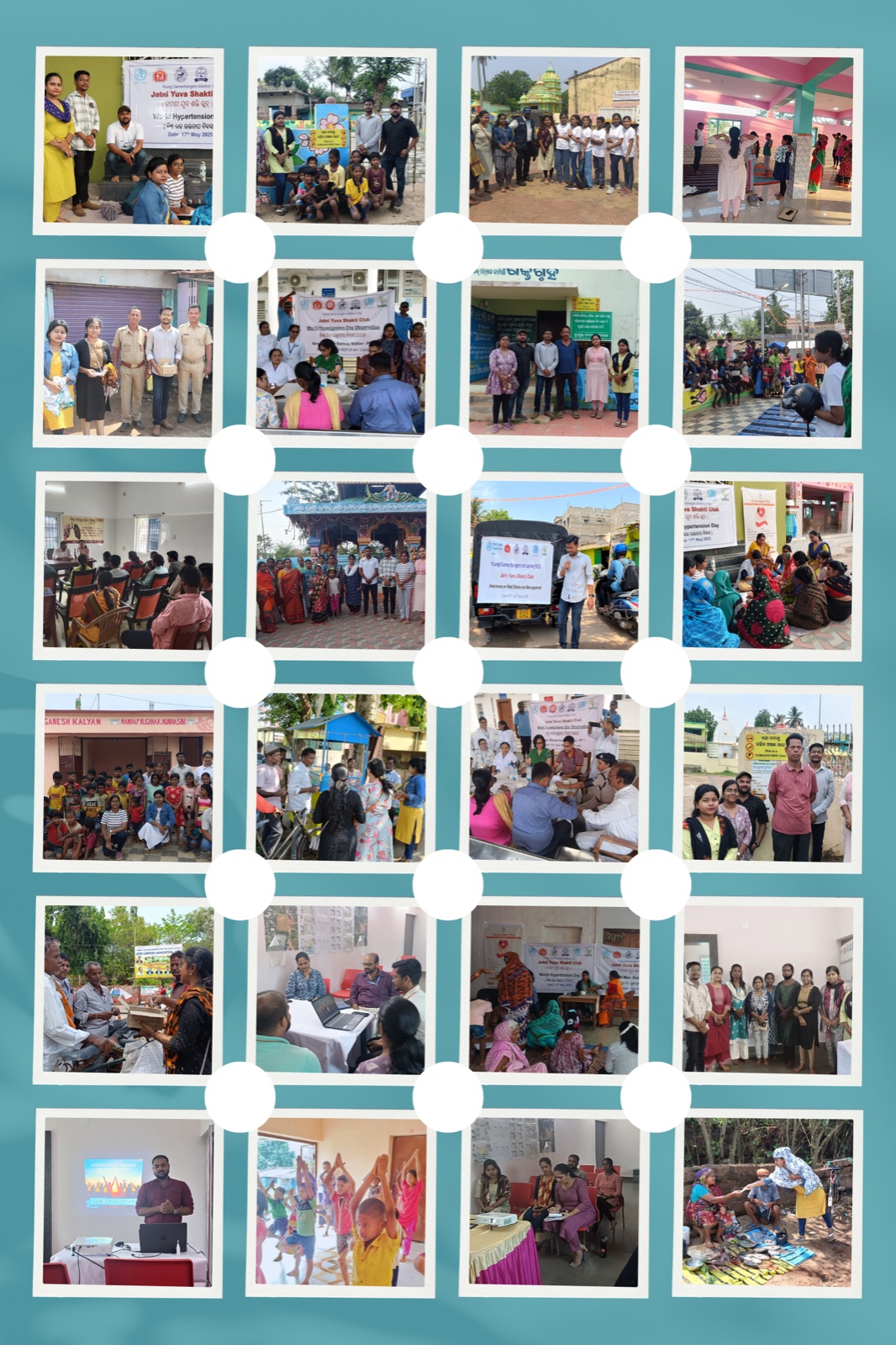
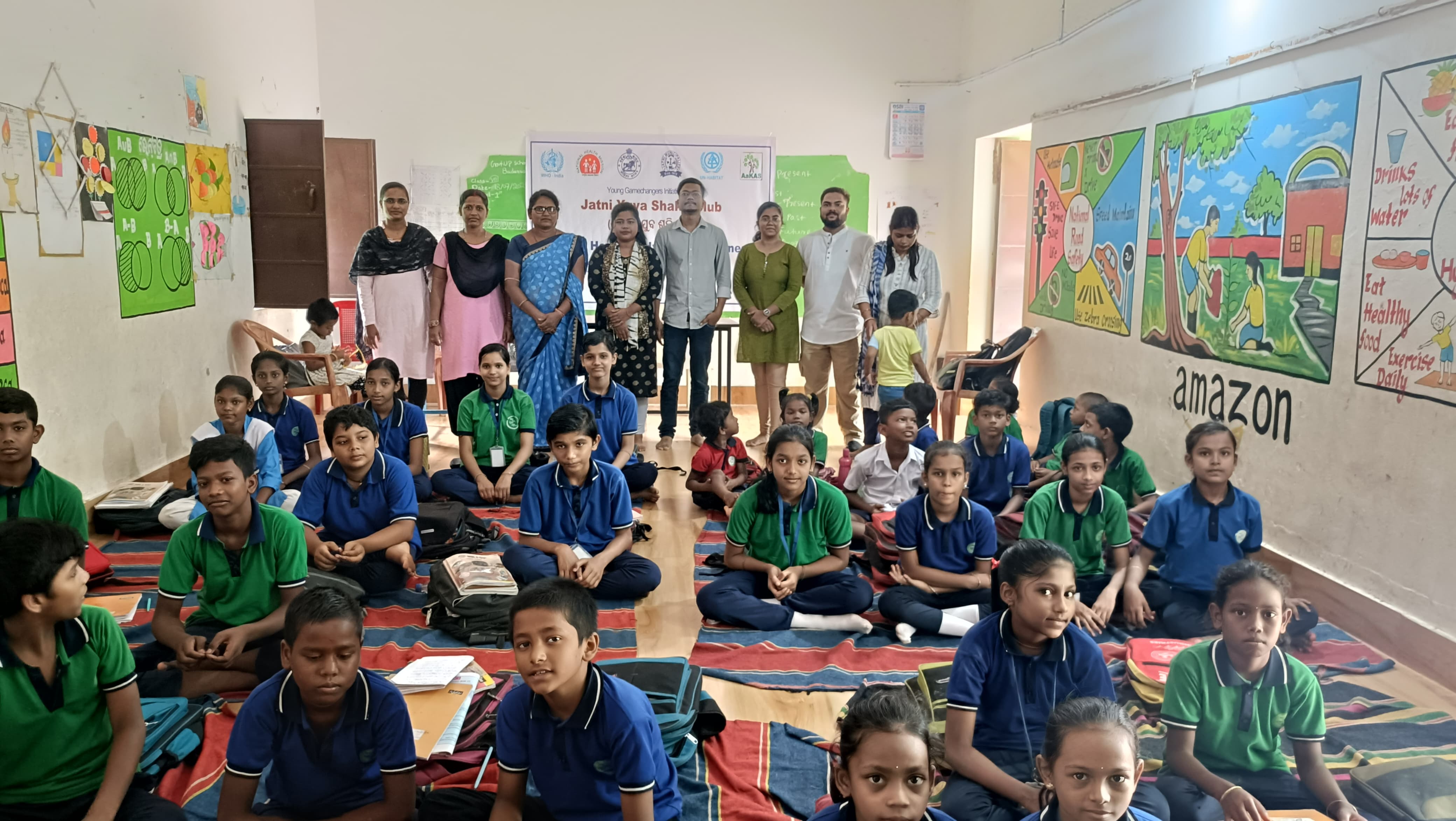
Initiative focuses on developing youth leadership through training and guided field experience. AaKAS leads the initiative by supporting young participants to engage responsibly with communities and transition toward independent action in collaboration with UN-Habitat and WHO.

chatgpt image feb 1, 2026, 05 38 57 pm

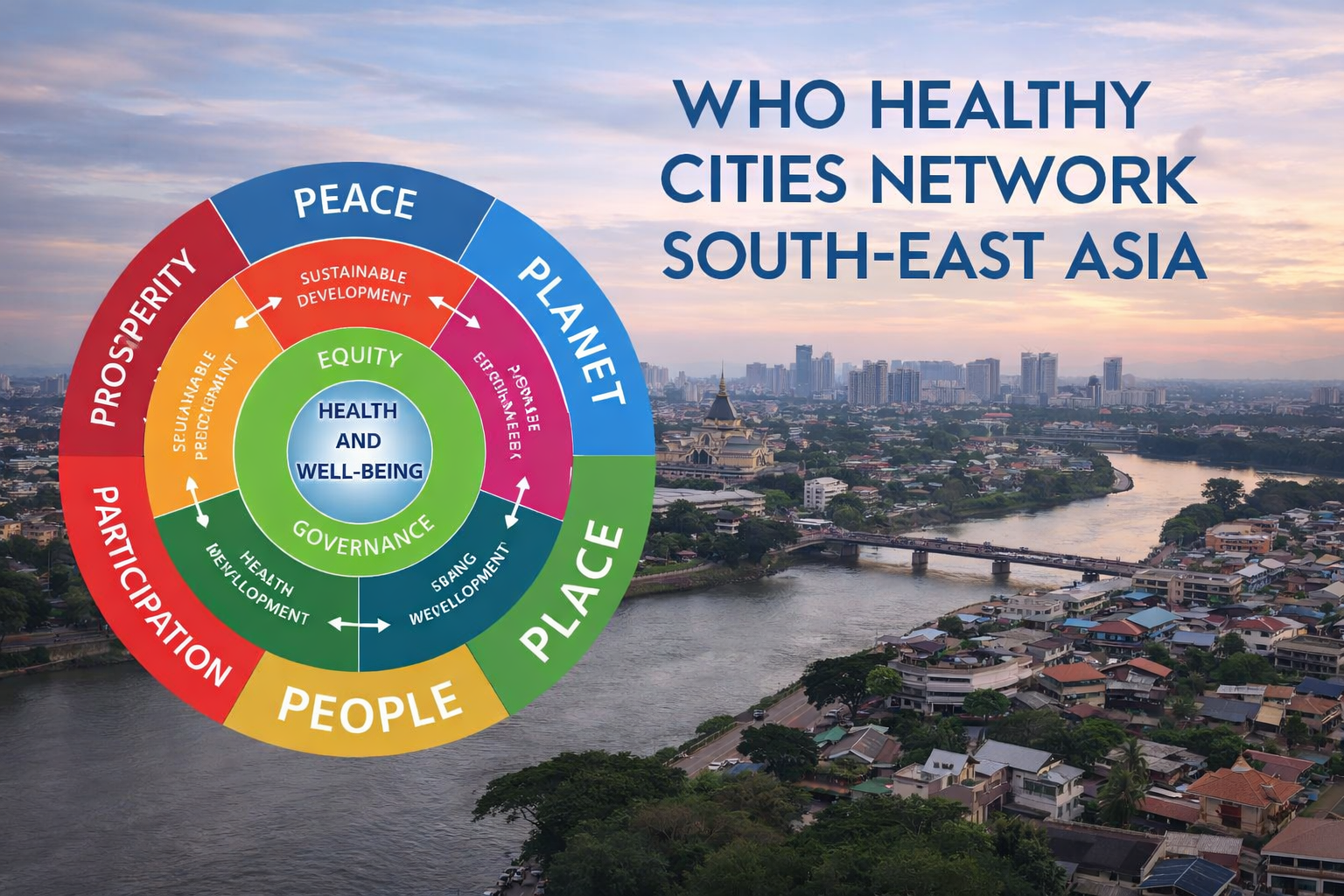
AaKAS serves as the technical partner to Indore MMunicipa Coorporation under the WHO Healthy Cities Network, supporting registration, baseline assessments, priority identification, and action plan development. Our role includes facilitating community participation, data collection and reporting, and integration of health-in-all-policies approaches at the municipal level. This work strengthens city-level capacity to address health determinants systematically and align with WHO frameworks.

1769883460187

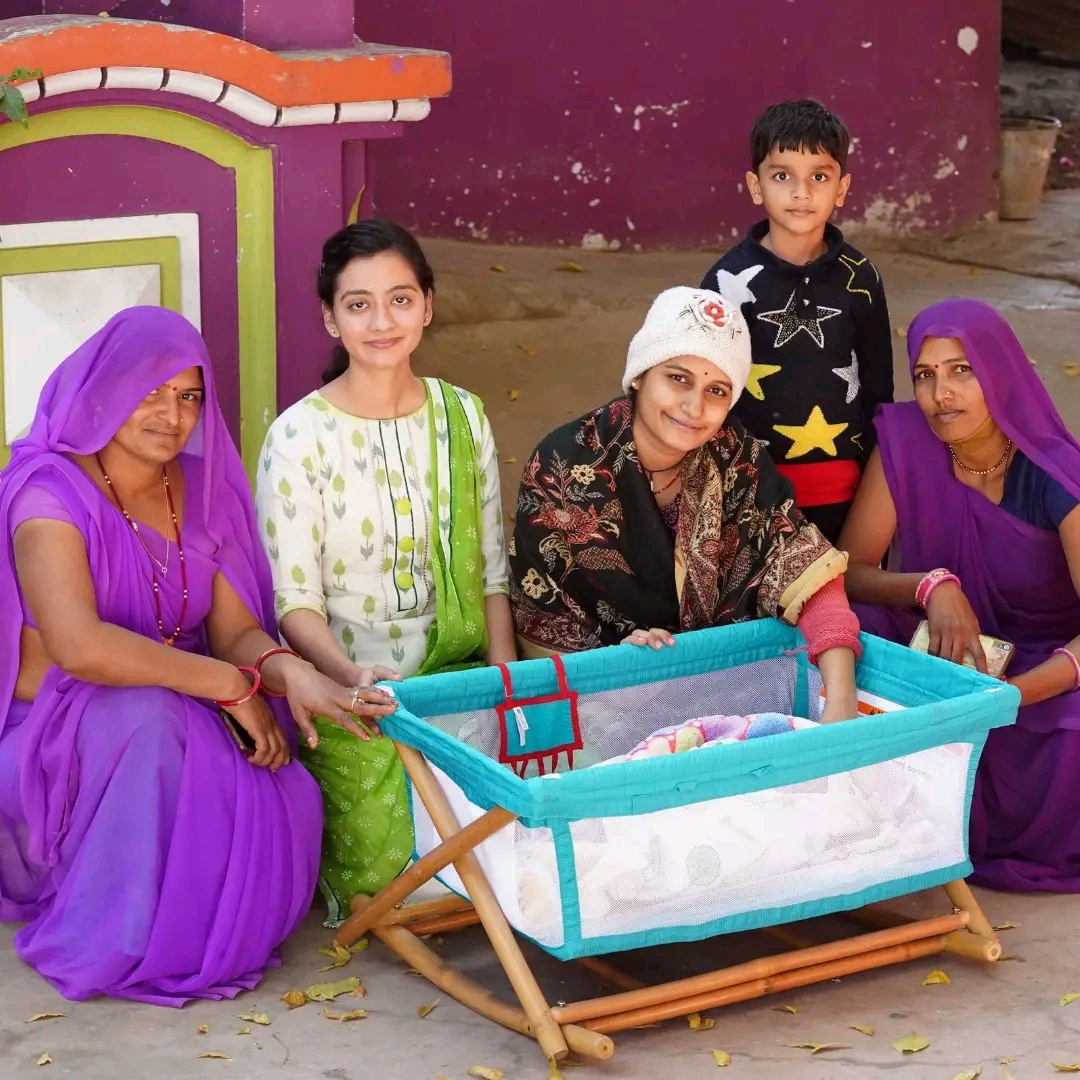
The Barkat Bundle is being evaluated through a randomized controlled trial (RCT). AaKAS serves as an implementation partner and has been associated with this work for over a decade, supporting field implementation, community engagement, and evidence generation.

chatgpt image feb 1, 2026, 05 42 01 pm

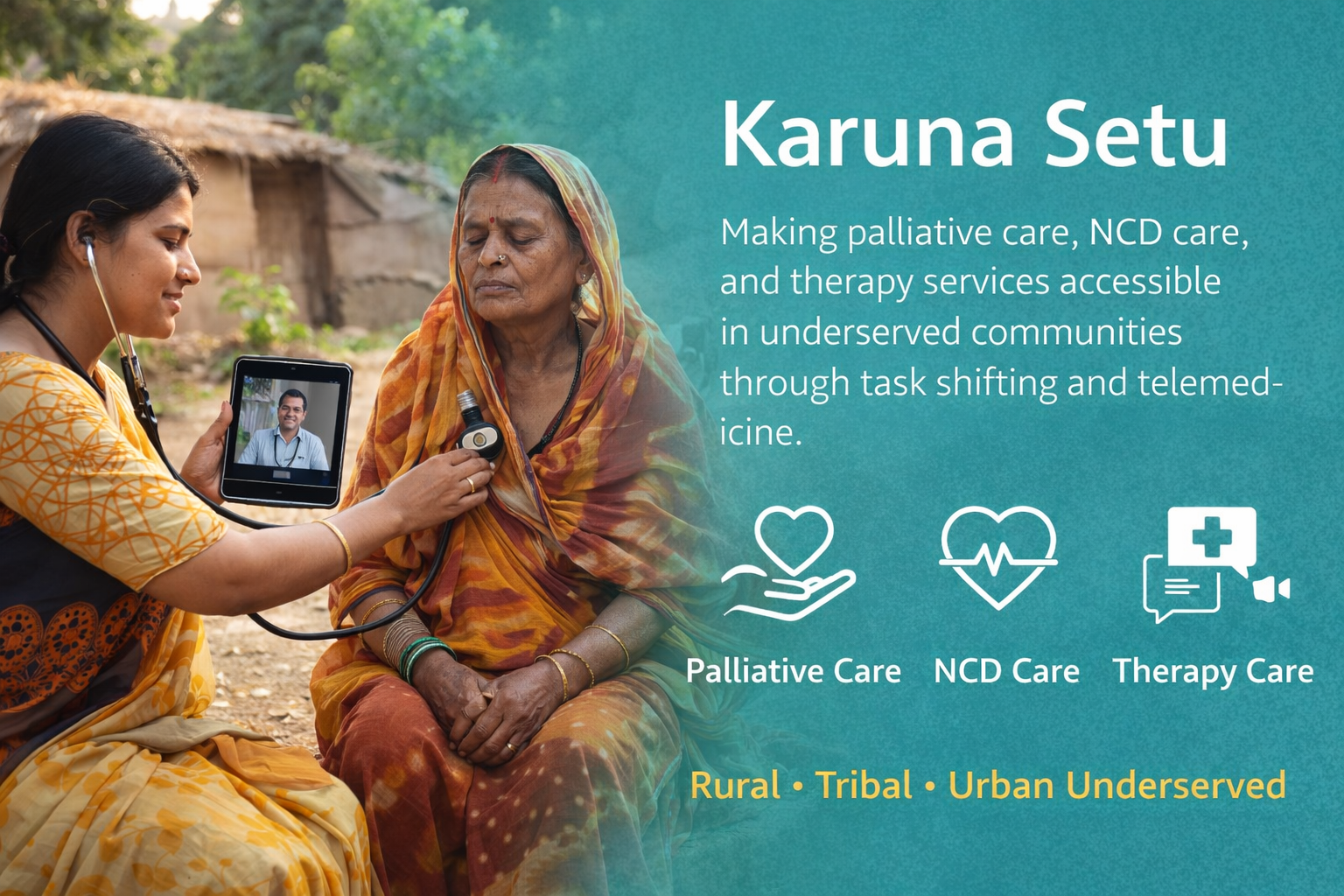
Karuna Setu is a care delivery model pioneered by AaKAS to make palliative care, NCD care, and therapy services accessible in rural, tribal, and underserved urban communities. The model uses task shifting and telemedicine to extend quality care through locally grounded health workers supported by specialist guidance.

img 20260114 wa0014

The project aims to improve public health responses to climate change by expanding early warning system for diarrheal diseases. Building  collaborations with researchers from South Africa, Indonesia, India, Nepal, Taiwan, and Vietnam to understand how climate events like ENSO and monsoon anomalies impact disease burden.

Get Involved Today

Join us in making a tangible difference in community health through your support and engagement.

Years of Experience
0 +
Trained Professionals
0 +
Individuals Reached
0 +
Multi-State Implementation
0 +
Partneships including MOH, WHO, UN-HABITAT,
0 +
Research Models
0 +

Support Our Mission

Shaped by years of working alongside communities, health workers, and public systems, our mission is not theoretical — it is lived, tested, and continuously refined.

Our Collaborations

who
un habitat logo english 01
amdavad municipal corporation logo
unicef 3
bb logo
um logo
phfi
images
emblem of imc indore
logo footer iiph
1766566012323
images
whatsapp image 2026 02 01 at 7.40.30 pm
quir2wit 400x400

Ways to Get Involved

Engage with AaKAS in ways that align with your interests, expertise, and capacity to contribute.

Collaborate With Us

Partner with AaKAS on research, program design, and implementation to develop scalable, evidence-based solutions that strengthen health systems and improve community outcomes.

Research & Implementation Partnerships

Partner with AaKAS on pilot projects, evaluations, and community-based interventions to translate research into scalable, real-world public health solutions.

Volunteer or Intern

Engage directly with AaKAS through fieldwork, research support, documentation, or program assistance to gain hands-on experience in community health initiatives.

Youth Engagement

Participate in youth leadership and community engagement programs that equip young people to lead, innovate, and drive meaningful change in their communities.

Support Our Work

Support AaKAS through donations, grants, or program funding to help scale evidence-based initiatives and strengthen community health action on the ground.

Experiences That Shaped the Work

"AaKAS demonstrates a thoughtful and responsible approach to working with young people and communities. Their emphasis on structured guidance, ethical engagement, and grounding work in real-world contexts reflects a strong understanding of what sustainable capacity building requires. AaKAS brings credibility, clarity, and care to youth-focused initiatives, which is essential when working at the intersection of community action and public health."
khanna
Dr. Abhishek Khanna (NPO WHO)
"AaKAS played an important role in shaping how I understand community work and leadership. Through their guidance and mentorship, I learned how to work responsibly with people, think more clearly about local issues, and grow in confidence. AaKAS created a supportive environment where young people like me could learn, collaborate, and move forward with a sense of purpose."
img 20260131 wa0042(1)
Deepshikha Ray (Young Gamechanger, Jatani)

Frequently Asked Questions

Find answers to common queries regarding our initiatives and organization.

What does AaKAS stand for and what is its core focus?

Aarogyam Knowledge to Action Society (AaKAS) is a non-profit organisation working to translate public health research, field experience, and community knowledge into practical, scalable health solutions for rural, tribal, and underserved urban communities.

AaKAS has its operational offices in Ahmedabad (Gujarat) and Indore (Madhya Pradesh), with long-standing field experience across rural, tribal, and urban underserved communities. While our teams are based in these locations, our work and collaborations extend nationwide, with initiatives and partnerships across states such as Bihar, Odisha, Uttar Pradesh, Rajasthan, and Maharashtra, depending on project needs. Through institutional partnerships, we support implementation, research, and capacity-building efforts across multiple regions in India.

Because solutions that are not grounded in evidence often fail at scale. AaKAS integrates implementation research, randomized controlled trials (RCTs), field evaluations, and learning loops to ensure interventions are effective, context-relevant, and sustainable.

No. Research is a tool, not the end goal. Our work spans program design, field implementation, capacity building, policy support, and system integration, ensuring research findings translate into real-world impact.

We work across:

  • Non-communicable diseases (NCDs)
  • Palliative care and home-based care
  • Musculoskeletal and neurological conditions
  • Women, adolescent, and community health
  • Climate and health
    Health systems strengthening and digital health

AaKAS has collaborated with organisations such as WHO, UNICEF, IIPHG, PHFI, academic institutions, local governments, and community-based organisations, depending on the nature of the project.

Yes. We actively collaborate on research studies, pilots, evaluations, and implementation partnerships, especially where field realities and system-level learning are critical.

Individuals can engage with AaKAS through:

  • Volunteering or internships
  • Field research and documentation
  • Capacity-building initiatives
  • Youth leadership and community engagement programs
  • Technical or strategic advisory roles

Yes. AaKAS provides field-based learning, research exposure, and mentorship opportunities for students and early-career professionals interested in public health, community engagement, implementation research, and health systems. Over the years, we have worked with and mentored students and professionals from institutions such as TISS Mumbai, TISS Hyderabad, IIPHG, Ashoka University, and other academic and training programmes. These engagements are closely integrated with ongoing field initiatives, allowing participants to learn through real-world public health practice.

Yes. Since 2020, AaKAS has been implementing the Karuna Setu telemedicine
model across rural Madhya Pradesh and tribal Gujarat. This model combines
telemedicine technology with task-shifted community health workers to
deliver palliative care, NCD management, and therapy services in areas
with limited specialist access.

Our telemedicine implementation experience includes:
• Technology infrastructure setup (devices, connectivity, platforms)
• Health worker training on telemedicine-assisted care delivery
• Community mobilization to increase adoption and utilization
• Clinical protocol development for remote care delivery
• Quality assurance and monitoring systems
• Integration with existing public health programs

We have trained 1,000+ health workers and reached 20,000+ individuals
through this model. We understand both the technical and behavioral
challenges of implementing telemedicine in low-resource, low-literacy
settings—and have proven strategies to address them.

AaKAS allocates funds primarily toward programme implementation, community engagement, training, and research activities. A significant portion supports direct service delivery and field operations, while a structured share is allocated to systems development, monitoring, and institutional strengthening. Administrative and operational costs are maintained within responsible limits to ensure efficiency and long-term sustainability.

AaKAS is a registered nonprofit society under Indian law. Donations are eligible for tax benefits under applicable sections (including 12A and 80G, where applicable). Official receipts and documentation are provided for all contributions to ensure compliance and transparency.

Costs vary depending on the intervention model (training, home-based care, youth engagement, research implementation). However, our task-shifting and systems-integration approach is designed to optimise cost-efficiency while maintaining quality. Detailed programme budgets and cost structures can be shared upon request for institutional partners and donors.

Yes. AaKAS documents programme outcomes, financial summaries, and impact highlights annually. Impact statements and programme briefs are available for partners and supporters to ensure transparency and accountability.

Yes. Donors may choose to support specific initiatives such as Karuna Setu (community-based care), Barkat Bundle research implementation, youth engagement programmes, or capacity building activities. Both restricted and unrestricted contributions are accepted, depending on donor preference.

AaKAS works through structured collaboration models including Memoranda of Understanding (MoUs), co-implementation partnerships, research collaborations, advisory support, and technical consultancy. Partnerships are tailored based on scope — ranging from pilot implementation to multi-district programme support.

Initial discussions typically begin with a concept alignment meeting. Depending on scope and documentation requirements, formal collaboration may be initiated within 4–8 weeks. Research-based collaborations may require additional time for ethical approvals and protocol finalisation.

AaKAS has contributed to research documentation, programme evaluations, policy briefs, and implementation research initiatives. Details of publications and technical reports are available upon request and will be consolidated under a dedicated research section.

AaKAS has operational experience across Gujarat, Madhya Pradesh, Bihar, Odisha, Uttar Pradesh, and additional regions through partnerships and research collaborations. Offices are based in Ahmedabad and Indore, with nationwide collaboration capacity.

AaKAS is a registered nonprofit society operating under Indian law. Registration details, compliance documentation, and certifications are maintained in accordance with regulatory requirements.

FCRA status and eligibility for receiving international contributions can be clarified upon request. Compliance with relevant regulatory frameworks remains a priority in all funding partnerships.

Get In Touch With Us!

Phone

+ 91 7383677661

Email

aarogyam.kas@gmail.com

Address

Ahmedabad- SG building, Gota, S. G. Highway, Ahmedabad, 382424

Delhi- LGF, E-2, E Block, Kalka Ji, New Delhi, 110019

Indore- 13, Narmada Nagar, Behind SBI, Indore, Madhya Pradesh, 452009

Contact Us

Name
Scroll to Top
Review Your Cart
0
Add Coupon Code
Subtotal